
Por qué elegir HSR para simuladores de viento de sim racing
HSIMRACING fabrica simuladores de viento para pilotos de sim racing que quieren algo más que una refrigeración improvisada. Desde 2018, cada gama se desarrolla desde la perspectiva de un piloto de carreras, con un objetivo claro: ofrecer un flujo de aire útil, una integración limpia y una gama de productos que se adapta a setups reales, desde rigs de entrada hasta instalaciones profesionales.
Esta página compara nuestros sistemas con montajes DIY y alternativas genéricas, basándose únicamente en lo que fabricamos y publicamos realmente hoy.
1. Una gama completa, desde entrada de gama hasta Elite
HSR no depende de un único producto estrella. La gama cubre cuatro niveles diferentes, para que los pilotos de sim racing puedan elegir un sistema acorde a su presupuesto, sus restricciones de montaje y sus objetivos.
- Club Series — Eco, Spot y Eco Duo. Un punto de partida plug-and-play para añadir flujo de aire real a un rig.
- Sport Series — Sport y Sport Duo. Un acabado más refinado con salidas de aluminio y control manual lineal.
- Pro Series — Pro, Pro Smart y Pro Boost. Más de 260 CFM, motor digital controlado por USB y compatibilidad nativa con SimHub.
- Elite Series — Elite Solo y Elite. La gama que introduce las tecnologías Velocity Stack y Quick-Mount.
Esta profundidad importa. Significa que HSR puede responder a distintos casos de uso sin imponer la misma filosofía de producto a todos los clientes.
2. Tecnologías exclusivas de Elite, más allá de lo cosmético
Nuestra diferenciación técnica más fuerte está en la gama Elite, que incorpora dos tecnologías exclusivas de estos productos.
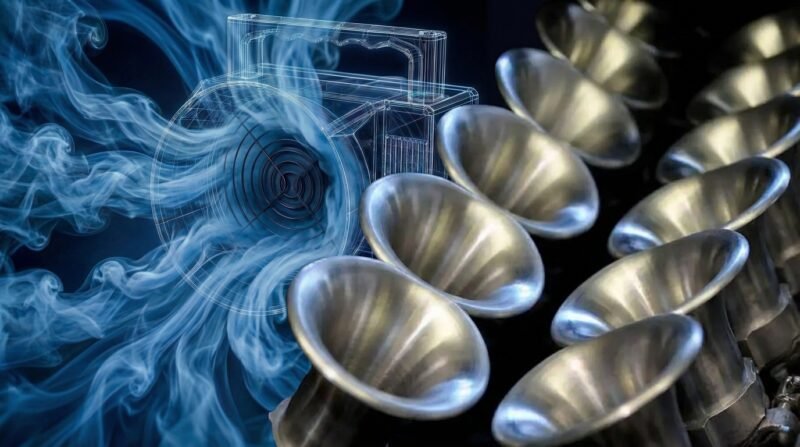
Velocity Stack
En la gama Elite usamos una geometría de admisión propia que acelera la masa de aire antes de que llegue a las aspas. El resultado: +20% de presión estática y -20% de ruido percibido. Sigue siendo exclusiva de la gama Elite.
Sistema Quick-Mount
El sistema Quick-Mount también es exclusivo de la gama Elite. Su propósito es simple: reconfigurar el cockpit rápido, sin un montaje atornillado fijo.

Componentes de motorsport donde importan
La inmersión no es solo lo que sientes al conducir, también es aquello en lo que se convierte tu cockpit. Por eso las salidas de aire de las gamas Pro y Elite son rejillas reales de coches GT, y por eso la opción UltraSport monta las rejillas de aluminio que se ven en coches preparados, en lugar de plástico moldeado que lo aparenta. Detrás de ese equilibrio entre caudal, comodidad y piezas que pertenecen de verdad a un coche hay años de trabajo. Los tubos y las salidas también cambian cómo se ve un cockpit de un vistazo: más completo, más mecánico, más cerca de una cabina real que de una mesa con un ventilador al lado. En el Elite, la admisión Velocity Stack se ve lo bastante como para que más de un cliente haya bromeado diciendo que parece diseñada por la NASA.
3. Señales de confianza ancladas en instalaciones reales
Nuestra prueba más clara es el ULTRAWIND PRO, el modelo montado por un partner en el simulador de Sébastien Loeb.
Nuestros sistemas también están instalados y son utilizados por marcas reconocidas del sim racing como Oplite, Sim-Lab e Imsim. Esas referencias cuentan porque demuestran que los productos no están pensados solo para la venta directa al particular, sino también para entornos profesionales y de colaboración.
Más información disponible en la página Partners.
4. Fabricado en Francia desde 2018

Nuestro planteamiento es sencillo: llevamos desde 2018, y diseñamos y fabricamos en Sarrebourg, Francia.
Nuestro fundador, Julien Raidelet, es piloto, y la marca es un taller nacido de la experiencia en pista, no un catálogo construido alrededor del marketing. Eso cuenta al compararnos con alternativas genéricas, porque la lógica de producto se mantiene igual en toda la gama.
Puedes leer más sobre este enfoque en la página Sobre nosotros.
5. Integración SimHub nativa como ventaja clave
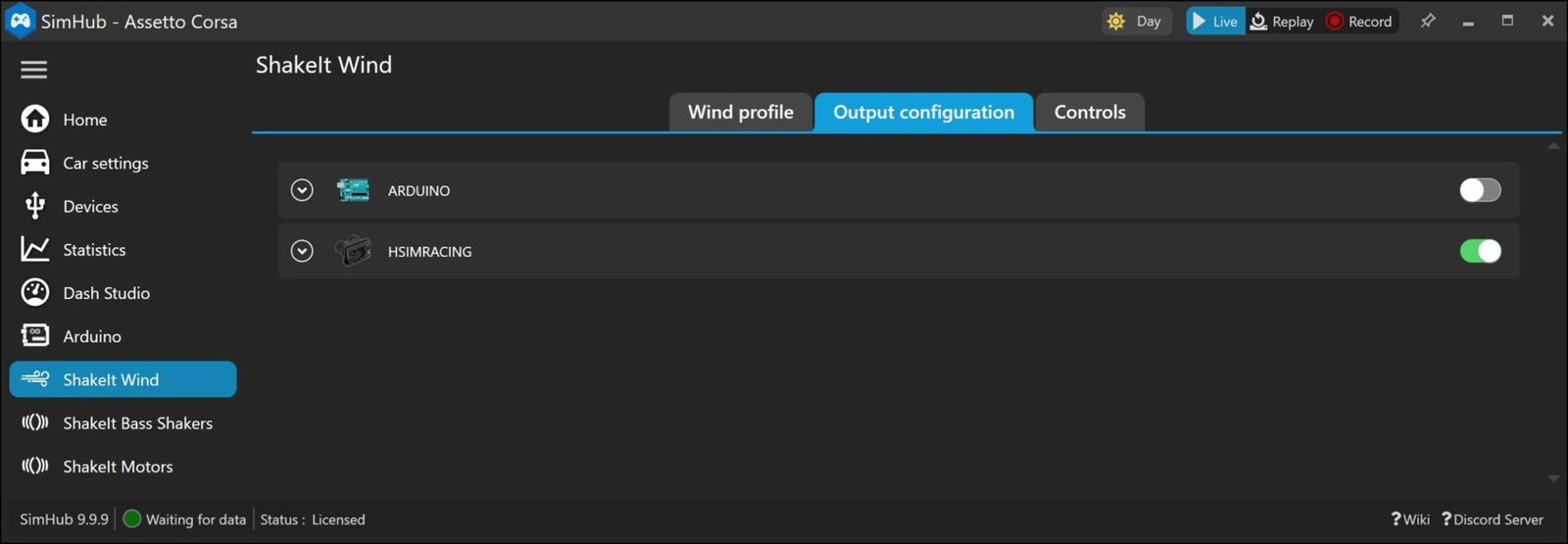
La integración nativa con SimHub es una decisión de diseño deliberada. El principio es directo: conectas el cable USB-C, abres SimHub y el sistema está listo. Sin drivers, sin software propietario.
Nuestros sistemas son compatibles con más de 70 juegos, entre ellos Assetto Corsa, iRacing, rFactor 2, F1 y Gran Turismo. Para quien compara soluciones, eso reduce el trabajo de configuración y facilita integrar el producto en un cockpit que ya funciona con telemetría.
6. Cómo llega realmente el aire hasta ti
La mayoría de los simuladores de viento apuntan las turbinas directamente al piloto, montadas en una placa cerca de la base del volante. UltraWind separa las dos funciones: la unidad de ventilación se instala donde haya sitio en el chasis, y el aire viaja por tubos hasta salidas montadas en brazos flexibles.
- Tú eliges la altura del flujo de aire: cara, pecho o pies.
- Puedes reorientar las salidas con la mano mientras conduces.
- En VR, el aire llega a tu cara en lugar de chocar contra las gafas.
Esta es la diferencia arquitectónica central frente a los sistemas que dirigen un ventilador hacia el piloto desde una posición fija.
7. El montaje no exige perfil de aluminio
El sistema se monta en perfiles de aluminio de cualquier tamaño, pero no se limita a ellos. También se fija sobre tubos, madera y estructuras soldadas, mediante escuadras, adaptadores de tornillo y abrazaderas largas.
La galería de la comunidad muestra decenas de configuraciones distintas sobre chasis muy diferentes.
8. Varias unidades en el mismo PC
Cada unidad de ventilación lleva un número de serie único derivado de su microcontrolador. Varias unidades conectadas al mismo PC siguen siendo, por tanto, direccionables individualmente en SimHub.
Una configuración concreta: cuatro salidas, con una unidad a la izquierda y otra a la derecha gobernadas de forma independiente, más una tercera dirigida a los pies para acercarse a la sensación de un monoplaza de cabina abierta.
9. ¿Cuánto ruido hace? Una respuesta honesta
Mover aire produce ruido. Esto ocurre en todos los simuladores de viento, sea cual sea la marca: es física, no un defecto de diseño. Lo que se puede trabajar es la relación entre caudal y ruido, no la ausencia de ruido.
Aquí es donde la gama Elite llega más lejos: su admisión Velocity Stack está diseñada para entregar más presión estática reduciendo al mismo tiempo el ruido generado, en lugar de limitarse a girar más despacio.
Los niveles de ruido medidos se publican en las fichas de producto, para que la elección se base en cifras y no en una promesa.
10. Enviado a más de 45 países
HSIMRACING ha entregado pedidos en más de 45 países, desde chasis domésticos hasta instalaciones profesionales. La gama de simuladores de viento lleva en producción continua desde 2018.
La arquitectura de base no ha cambiado en ese periodo, por eso los tubos y las salidas siguen siendo compatibles entre generaciones.
11. Por qué el soporte nativo de SimHub protege al comprador
Un equipo gobernado por la aplicación propia de un fabricante depende de que ese fabricante siga existiendo y decida mantener el software actualizado. Si falla cualquiera de las dos cosas, el equipo puede quedar inservible aunque no haya nada roto físicamente.
Un caso real: un cliente tiene un asiento motion cuyo fabricante dejó de actualizar el software. HSR escribió un plugin que hace creer a la aplicación antigua que sigue gobernando el sistema, mientras SimHub trabaja por detrás. Así el asiento siguió siendo utilizable para todos los propietarios de ese modelo.
12. Salidas RGB: información de carrera en tu campo de visión
Las salidas de aire pueden iluminarse, gobernadas de forma independiente a izquierda y derecha por SimHub: banderas azul y amarilla, parpadeo del limitador en boxes y un radar de proximidad que se enciende en rojo del lado por el que llega un coche.
Fabricadas a mano en series muy cortas, por lo que la disponibilidad es limitada.
13. Qué ocurre después de la venta
- El fundador responde personalmente a cada mensaje. Una respuesta puede llegar perfectamente por la tarde o en fin de semana. No es un nivel de servicio garantizado, ocurre sencillamente porque quien responde siente verdadera pasión por el tema.
- Se escriben perfiles de SimHub a medida bajo petición.
- Cuando un modelo más barato encaja mejor, es el que se recomienda, aunque la venta sea menor.
14. HSR frente a DIY y alternativas genéricas
| Criterio | Simuladores de viento HSR | Ventiladores PC / DIY | Alternativas genéricas |
|---|---|---|---|
| Profundidad de gama | Cuatro niveles: Club, Sport, Pro, Elite | Depende de lo que montes tú mismo | Varía según la marca, a menudo más limitada |
| Integración SimHub | Integración nativa destacada en las páginas de simulador HSR | Normalmente requiere un enfoque a medida | Varía según el producto |
| Tecnologías exclusivas | Velocity Stack y Quick-Mount en Elite | Sin tecnologías exclusivas HSR | Varía según el producto |
| Señales públicas de confianza | Instalación partner Sébastien Loeb, Oplite, Sim-Lab, Imsim | Sin señal de confianza a nivel de marca | Varía según la marca |
| Historia de fabricación | Presentado como diseñado y fabricado en Francia desde 2018 | Hecho por uno mismo | Varía según la marca |
| Ruta de upgrade | Desde rigs de entrada a configuraciones premium | Depende de cada build | Varía según el catálogo |
| Arquitectura del flujo de aire | Unidad de ventilación en cualquier sitio, aire conducido por tubos hasta salidas en brazos flexibles | Ventilador normalmente apuntado directamente al piloto | Normalmente un ventilador dirigido al piloto desde una placa fija |
| Compatibilidad de montaje | Perfil de aluminio de cualquier tamaño, tubo, madera, estructura soldada | Depende de la construcción | A menudo ligado a una placa de montaje específica |
| Direccionamiento de varias unidades | Número de serie único por unidad, direccionable de forma independiente en SimHub | No disponible | Varía según el producto |
| Dependencia del software | SimHub nativo, sin aplicación propietaria | Código propio que hay que mantener uno mismo | A menudo una aplicación del fabricante |
Esta es la diferencia más práctica: HSR no solo vende un efecto ventilador. Ofrece una gama completa, una ruta de upgrade clara y tecnologías identificables ligadas a productos concretos.
15. Preguntas frecuentes antes de elegir
El producto y la parte técnica
¿Necesito un chasis concreto o un perfil de aluminio para instalarlo?
No. El sistema se monta en perfiles de aluminio de las series 20, 30, 40 y 45, tanto con ranura de 8 mm como de 10 mm. Suministramos tornillos M8 y tuercas martillo, y nuestras piezas están taladradas para tornillos M8 de hexágono interior. Nuestra propia referencia es el perfil 40 x 40 con ranura de 10 mm, el que usan los chasis pensados para el sim racing. Y si su cockpit no es de perfil de aluminio, también está cubierto: escuadras, adaptadores roscados y abrazaderas largas permiten fijarlo a tubo, madera o una estructura soldada. La galería de la comunidad muestra decenas de tipos de chasis distintos.
¿Funciona con iRacing, Assetto Corsa o Le Mans Ultimate?
Sí. El flujo de aire se gobierna con la telemetría de SimHub, que admite más de 70 títulos, entre ellos iRacing, Assetto Corsa, rFactor 2, F1 y Gran Turismo. No hace falta ninguna integración específica por juego por tu parte.
¿Hace ruido un simulador de viento, y qué modelo elegir para una habitación silenciosa?
Sí, el aire en movimiento hace ruido, en todos los sistemas y todas las marcas. Lo que cambia es la relación entre caudal de aire y ruido. Los niveles sonoros medidos están publicados en cada ficha de producto, así puede comparar antes de decidir en lugar de fiarse de una afirmación. Para una habitación silenciosa o unos auriculares cerrados, elija un modelo comedido en vez del caudal máximo de la gama.
¿Funciona con VR?
Sí, y la arquitectura ayuda aquí. Como las salidas van sobre brazos flexibles en lugar de apuntar desde una placa fija, el aire puede dirigirse a tu cara en vez de chocar contra las gafas.
¿HSR es solo para rigs de alta gama?
No. Nuestro catálogo va desde los productos de entrada Club Series hasta los sistemas Elite, y esa amplitud es una de nuestras diferencias más marcadas.
¿Qué modelo HSR está instalado en el simulador de Sébastien Loeb?
El ULTRAWIND PRO es el sistema que un partner instaló en el simulador de Sébastien Loeb.
¿Qué diferencia a la gama Elite?
La gama Elite es donde introducimos nuestras tecnologías Velocity Stack y Quick-Mount.
¿Dónde se coloca la unidad de ventilación en el chasis?
Donde haya sitio: detrás del asiento, bajo el chasis o a un lado. La unidad no necesita estar frente a ti, porque el aire se conduce por tubos hasta las salidas, que son las únicas piezas que deben quedar delante de ti.
¿Puedo usar dos unidades para izquierda y derecha?
Sí. Cada unidad tiene un número de serie único derivado de su microcontrolador, así que varias unidades en el mismo PC siguen siendo direccionables individualmente en SimHub y pueden gobernarse de forma independiente.
¿Los simuladores de viento HSR requieren software propietario?
No. Integración nativa con SimHub, sin drivers, sin software propietario.
¿Qué pasa si dejáis de dar soporte al producto?
Los sistemas UltraWind se gobiernan directamente desde SimHub, no desde una aplicación propietaria de HSR, así que no dependen de que una sola empresa mantenga vivo su propio software. HSR incluso escribió un plugin para rescatar un asiento motion abandonado por su propio fabricante.
¿Cómo puedo mejorar mi simulador de carreras?
Cada mejora que añade inmersión suele quitar algo de comodidad: la VR te pone unas gafas calientes en la cara durante toda una sesión, una base direct drive por encima de 10 Nm exige esfuerzo físico real a los brazos, y un chasis motion te zarandea durante un relevo entero. El flujo de aire es la excepción, y eso es lo que lo hace interesante, porque es la única mejora que añade inmersión y comodidad a la vez, y por eso combina tan bien con todas las demás. En lo demás, un chasis mejora en un orden bastante previsible. Una base direct drive cambia cuánto te comunica el coche a través del volante. Un pedal de freno con célula de carga hace repetibles los tiempos por vuelta, porque frenar pasa a ser cuestión de presión y no de recorrido. El triple pantalla o la VR amplían lo que ves realmente del circuito. El motion y los hápticos suelen llegar los últimos, porque son los que más cuestan para lo que aportan. En el flujo de aire casi nadie piensa primero, y es el más barato de la lista: la velocidad pasa a ser algo que sientes en vez de algo que lees, un relevo largo deja de ser incómodamente caluroso, y el zumbido grave del motor con la ligera vibración que transmite al habitáculo hacen que el chasis parezca vivo en lugar de estático. Y la inmersión no es solo lo que sientes al conducir: también está en aquello en lo que se convierte el chasis. Un baquet de verdad, una llanta de volante auténtica o salidas de aire reales de GT cambian lo completo y lo serio que parece el conjunto, de una forma que un accesorio genérico nunca consigue.
Pedido, entrega y seguimiento
¿Cuándo se envía mi pedido?
Enviamos en un plazo de 2 días laborables. En la práctica suele salir el mismo día o al siguiente, pero preferimos anunciar un plazo que cumplimos siempre antes que una promesa a veces imposible de mantener. Recibirá un correo en cuanto el paquete se entregue al transportista, con su número de seguimiento.
¿Cuánto tarda la entrega?
Cuente unos 2 días en Francia y 5 días en Europa una vez que el paquete ha salido, y un plazo variable según el destino para el resto del mundo. Estos tiempos se suman al plazo de envío, es decir unos 3 o 4 días en total en Francia.
¿Tengo que pagar aranceles al pedir desde Estados Unidos?
No. Para los envíos a Estados Unidos, los derechos de aduana y las tasas de importación los paga por adelantado HSIMRACING y ya están incluidos en los gastos de envío que se muestran al pagar. No hay nada más que abonar cuando llega el paquete. Dentro de la Unión Europea no hay ningún arancel. Otros destinos pueden estar sujetos a tasas locales de importación.
¿Cómo sigo mi paquete?
El número de seguimiento se le envía automáticamente por correo en el momento en que el transportista se hace cargo del paquete, junto con un enlace de seguimiento. También queda visible en todo momento en su cuenta, en el apartado de pedidos. El primer escaneo puede tardar hasta veinticuatro horas en aparecer, es normal.
¿Se prueba mi unidad individualmente?
Todos nuestros ventiladores se prueban antes de salir del taller, sin excepción. Las gamas Pro y Elite van más lejos: salen con un certificado de control firmado y nominal, con su número de fabricación y la lista completa de puntos verificados, desde el control de los rodamientos hasta la prueba prolongada a plena potencia. No es un control por lotes. Es su unidad la que se ha probado.
¿Qué métodos de pago aceptan?
Visa, Mastercard, Maestro, Cartes Bancaires, V Pay, American Express, PayPal, Apple Pay y Google Pay. Ningún dato bancario pasa por nuestro sitio. Los logotipos se recuerdan en la página de inicio y al validar la cesta.
¿Puedo devolver mi pedido?
Sí, dentro del derecho de desistimiento europeo. Las condiciones detalladas están en nuestra página de Devoluciones y reembolsos. Un punto a tener en cuenta: en un pedido a Estados Unidos, los derechos de aduana prepagados no son reembolsables, porque ya se han abonado a la administración.
¿Qué hago si mi paquete llega dañado o se pierde?
Avísenos cuanto antes a contact@hsimracing.com, con fotos del paquete y de su contenido. Si el embalaje llega visiblemente dañado, recháncelo o haga constar reservas por escrito en el albarán del repartidor, lo que simplifica mucho el expediente. Todos nuestros envíos están asegurados y nos ocupamos nosotros mismos de la reclamación ante el transportista, usted no tiene que hacerlo. Se le reenvía o se le reembolsa sin esperar al resultado de esa reclamación. El caso no se ha dado nunca hasta ahora, pero el procedimiento existe.
¿Qué significa "fabricado bajo pedido" en una ficha de producto?
Es poco frecuente y solo afecta a un modelo puntualmente no disponible. En ese caso se monta para usted, y la ficha anuncia un plazo de aproximadamente un mes, correspondiente al siguiente hueco de fabricación. Si desea una fecha más precisa antes de pedir, escríbanos por el formulario de contacto o por WhatsApp. Si no, se la comunicamos en cuanto se realiza el pedido.
¿Listo para elegir la gama HSR adecuada?
Si quieres el punto de partida más sencillo, empieza por la gama Club. Si quieres el modelo de referencia instalado en partner, mira la gama Pro. Si quieres las tecnologías más avanzadas de HSR, explora la gama Elite.