
Perché scegliere HSR per un simulatore di vento da sim racing
HSIMRACING costruisce simulatori di vento per sim racer che vogliono qualcosa di più del raffreddamento improvvisato. Dal 2018, ogni gamma è sviluppata dalla prospettiva di un pilota, con un obiettivo chiaro: erogare flusso d'aria utile, integrazione pulita e una gamma di prodotti adatta a setup reali, dai rig entry-level alle installazioni professionali.
Questa pagina confronta HSR con build DIY e alternative generiche, basandosi solo su ciò che è dichiarato pubblicamente sul sito oggi.
1. Una gamma completa, dall'entry-level all'Elite
HSR non si appoggia su un singolo prodotto di punta. La gamma copre quattro livelli distinti, in modo che i sim racer possano scegliere un sistema adatto al loro budget, ai vincoli di montaggio e agli obiettivi.
- Club Series — Eco, Spot ed Eco Duo. Un punto di partenza plug-and-play per aggiungere vero flusso d'aria a un rig.
- Sport Series — Sport e Sport Duo. Una finitura più raffinata con uscite in alluminio e controllo manuale lineare.
- Pro Series — Pro, Pro Smart e Pro Boost. 260+ CFM, motore digitale controllato via USB e compatibilità SimHub nativa.
- Elite Series — Elite Solo ed Elite. La gamma che introduce le tecnologie Velocity Stack e Quick-Mount.
Questa profondità conta. Significa che HSR può rispondere a casi d'uso diversi senza imporre la stessa filosofia di prodotto a ogni cliente.
2. Tecnologie esclusive Elite, non solo differenze cosmetiche
La nostra differenziazione tecnica più forte sta nella gamma Elite, dove abbiamo introdotto due tecnologie riservate a questi prodotti.
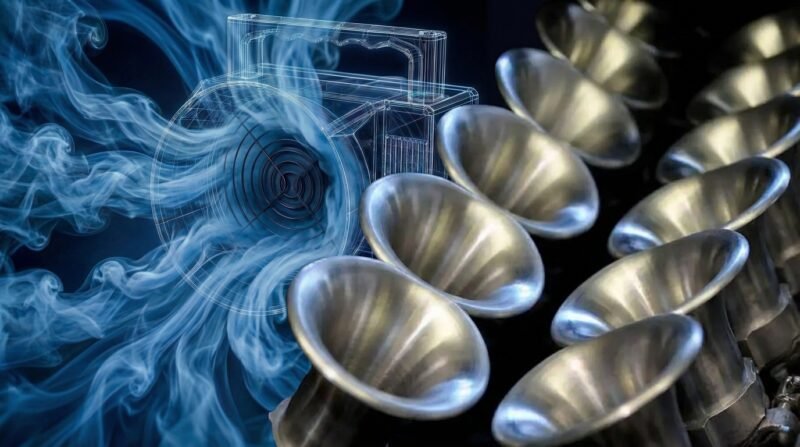
Velocity Stack
Sulla gamma Elite usiamo una geometria di presa d'aria proprietaria che accelera la massa d'aria prima che raggiunga le pale. Il risultato: +20% di pressione statica e -20% di rumore percepito. Resta esclusiva della gamma Elite.
Sistema Quick-Mount
Anche il sistema Quick-Mount è esclusivo della gamma Elite. Lo scopo è semplice: riconfigurare il rig in fretta, senza un fissaggio bullonato permanente.

Componenti motorsport dove contano
L'immersione non è solo quello che senti mentre guidi: è anche quello che diventa la tua postazione. Per questo le uscite d'aria delle gamme Pro ed Elite sono vere bocchette da auto GT, e per questo l'opzione UltraSport monta le bocchette in alluminio che si trovano sulle auto preparate, invece di plastica stampata fatta per sembrarlo. Dietro questo equilibrio tra portata d'aria, comfort e componenti che appartengono davvero a un'auto ci sono anni di lavoro. Tubi e bocchette cambiano anche il modo in cui la postazione si legge a colpo d'occhio: più completa, più meccanica, più vicina a un abitacolo vero che a una scrivania con un ventilatore di fianco. Sull'Elite, la presa d'aria Velocity Stack è talmente in vista che più di un cliente ha scherzato dicendo che sembra progettata dalla NASA.
3. Segnali di fiducia basati su installazioni reali
La nostra prova più chiara è ULTRAWIND PRO, il modello installato sul simulatore di Sébastien Loeb tramite un'installazione realizzata da un partner.
I nostri sistemi sono installati e adottati anche da marchi riconosciuti del sim racing come Oplite, Sim-Lab e Imsim. Questi riferimenti contano perché mostrano che i prodotti non sono pensati solo per la vendita diretta al singolo, ma anche per ambienti professionali e per i partner.
Maggiori dettagli sulla pagina Partner.
4. Costruito in Francia dal 2018

Il nostro posizionamento è semplice: siamo in attività dal 2018, e progettiamo e produciamo a Sarrebourg, in Francia.
Il nostro fondatore, Julien Raidelet, è un pilota, e il marchio è un'officina nata dall'esperienza in pista, non un catalogo costruito attorno al marketing. Questo conta nel confronto con le alternative generiche, perché la logica del prodotto resta la stessa lungo tutta la gamma.
Maggiori dettagli su quell'approccio nella pagina Chi siamo.
5. Integrazione SimHub nativa come vantaggio chiave del prodotto
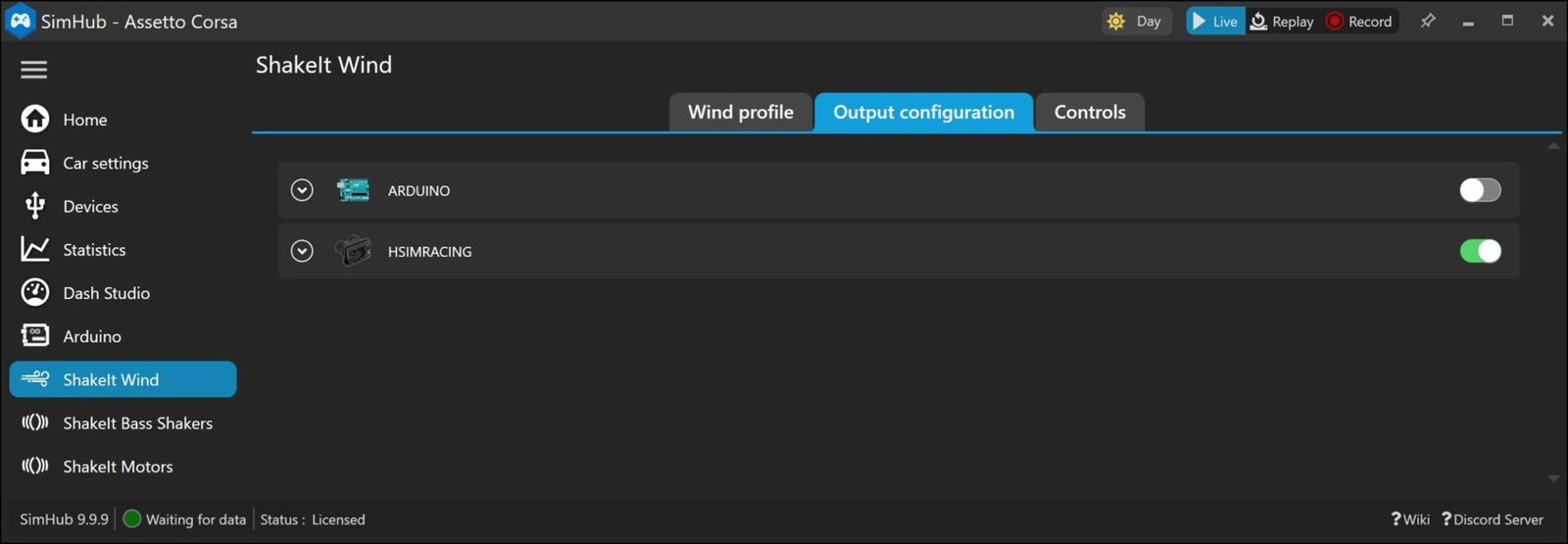
HSR sottolinea ripetutamente l'integrazione SimHub nativa come vantaggio pratico. Sul sito, il messaggio attuale è chiaro: collega il cavo USB-C, apri SimHub e il sistema è pronto senza driver né software proprietario.
I nostri sistemi sono compatibili con oltre 70 giochi, tra cui Assetto Corsa, iRacing, rFactor 2, F1 e Gran Turismo. Per chi sta confrontando più soluzioni, questo significa meno configurazione iniziale e un prodotto più facile da inserire in un rig che già lavora sulla telemetria.
6. Come l'aria ti raggiunge davvero
La maggior parte dei simulatori di vento punta le turbine direttamente verso il pilota, montate su una piastra vicino alla base dello sterzo. UltraWind separa le due funzioni: il gruppo ventola si installa dove c'è spazio sul telaio, e l'aria viaggia in tubi fino a bocchette montate su bracci flessibili.
- Scegli tu l'altezza del flusso d'aria: viso, petto o piedi.
- Puoi riorientare le bocchette con la mano mentre guidi.
- In VR l'aria arriva sul viso invece di sbattere contro il visore.
È la differenza architetturale centrale rispetto ai sistemi che puntano una ventola verso il pilota da una posizione fissa.
7. Il montaggio non richiede un profilo in alluminio
Il sistema si monta su profili in alluminio di qualsiasi misura, ma non si limita a questi. Si fissa anche su tubi, su legno e su strutture saldate, con squadrette, adattatori a vite e fascette lunghe.
La galleria della community mostra decine di configurazioni diverse su telai molto differenti.
8. Più unità sullo stesso PC
Ogni gruppo ventola porta un numero di serie univoco derivato dal suo microcontrollore. Più unità collegate allo stesso PC restano quindi indirizzabili singolarmente in SimHub.
Una configurazione concreta: quattro bocchette, con un'unità a sinistra e una a destra pilotate in modo indipendente, più una terza rivolta ai piedi per avvicinarsi alla sensazione di una monoposto a abitacolo aperto.
9. Quanto è rumoroso? Una risposta onesta
Muovere aria produce rumore. Vale per ogni simulatore di vento, qualunque sia la marca: è fisica, non un difetto di progetto. Ciò su cui si può lavorare è il rapporto tra portata e rumore, non l'assenza di rumore.
È qui che la gamma Elite si spinge più avanti: la sua presa Velocity Stack è progettata per fornire più pressione statica abbassando al tempo stesso il rumore generato, invece di limitarsi a girare più piano.
I livelli sonori misurati sono pubblicati sulle schede prodotto, così la scelta si basa su numeri e non su una promessa.
10. Spedito in oltre 45 paesi
HSIMRACING ha consegnato ordini in più di 45 paesi, dal telaio casalingo all'installazione professionale. La linea di simulatori di vento è in produzione continua dal 2018.
L'architettura di base non è cambiata in questo periodo, ed è il motivo per cui tubi e bocchette restano compatibili tra le generazioni.
11. Perché il supporto nativo SimHub protegge chi acquista
Un hardware pilotato dall'applicazione proprietaria di un costruttore dipende dal fatto che quel costruttore resti sul mercato e scelga di aggiornare il software. Se una delle due cose viene meno, l'hardware può diventare inutilizzabile pur senza rotture fisiche.
Un caso reale: un cliente possiede un sedile motion il cui costruttore ha smesso di aggiornare il software. HSR ha scritto un plugin che fa credere alla vecchia applicazione di pilotare ancora il sistema, mentre dietro lavora SimHub. Il sedile è così rimasto utilizzabile per tutti i proprietari di quel modello.
12. Bocchette RGB: le informazioni di gara nel tuo campo visivo
Le bocchette d'aria possono illuminarsi, pilotate in modo indipendente a sinistra e a destra da SimHub: bandiere blu e gialle, lampeggio del limitatore ai box e un radar di prossimità che si accende di rosso dal lato da cui arriva una vettura.
Costruite a mano in serie molto ridotte, quindi con disponibilità limitata.
13. Cosa succede dopo la vendita
- Il fondatore risponde personalmente a ogni messaggio. Una risposta può benissimo arrivare di sera o nel fine settimana. Non è un livello di servizio garantito, accade semplicemente perché chi risponde è davvero appassionato dell'argomento.
- Su richiesta vengono scritti profili SimHub su misura.
- Quando un modello meno costoso è più adatto, è quello che viene consigliato, anche se la vendita è più piccola.
14. HSR vs DIY e alternative generiche
| Caratteristica | Simulatori di vento HSR | Ventole PC / DIY | Alternative generiche |
|---|---|---|---|
| Profondità della gamma | Quattro livelli: Club, Sport, Pro, Elite | Dipende da cosa costruisci tu | Variabile per marchio, spesso più ristretta |
| Integrazione SimHub | Integrazione nativa evidenziata sulle pagine dei simulatori HSR | Solitamente richiede un approccio custom | Variabile per prodotto |
| Tecnologie esclusive | Velocity Stack e Quick-Mount su Elite | Nessuna tecnologia esclusiva HSR | Variabile per prodotto |
| Segnali di fiducia pubblici | Installazione partner Sébastien Loeb, Oplite, Sim-Lab, Imsim | Nessun segnale di fiducia a livello marchio | Variabile per marchio |
| Storia di produzione | Presentato come progettato e prodotto in Francia dal 2018 | Auto-costruito | Variabile per marchio |
| Percorso di upgrade | Dai rig entry-level alle configurazioni premium | Dipende da ogni build | Variabile per catalogo |
| Architettura del flusso d'aria | Gruppo ventola collocabile ovunque, aria convogliata in tubi verso bocchette su bracci flessibili | Ventola di solito puntata direttamente sul pilota | Di solito una ventola puntata sul pilota da una piastra fissa |
| Compatibilità di montaggio | Profilo in alluminio di qualsiasi misura, tubo, legno, struttura saldata | Dipende dalla realizzazione | Spesso legata a una piastra di montaggio specifica |
| Indirizzamento di più unità | Numero di serie univoco per unità, indirizzabile in modo indipendente in SimHub | Non disponibile | Varia in base al prodotto |
| Dipendenza dal software | SimHub nativo, nessuna applicazione proprietaria necessaria | Codice proprio da mantenere da soli | Spesso un'applicazione del costruttore |
Questa è la differenza più pratica: HSR non vende solo un effetto ventola. Offre una gamma completa, un percorso di upgrade chiaro e tecnologie identificabili legate a prodotti specifici.
15. Domande comuni prima di scegliere
Il prodotto e la parte tecnica
Serve un telaio particolare o un profilo in alluminio per installarlo?
No. Il sistema si monta sui profilati di alluminio delle serie 20, 30, 40 e 45, con cava da 8 mm come da 10 mm. Forniamo viti M8 e dadi a martello, e i nostri pezzi sono forati per viti M8 a brugola. Il nostro riferimento è il profilato 40 x 40 con cava da 10 mm, quello usato dai telai pensati per il sim racing. E se il tuo cockpit non è in profilato di alluminio, sei coperto lo stesso: squadrette, adattatori a vite e fascette lunghe permettono di fissarlo a tubi, legno o a una struttura saldata. La galleria della community mostra decine di telai diversi.
Funziona con iRacing, Assetto Corsa o Le Mans Ultimate?
Sì. Il flusso d'aria è pilotato dalla telemetria di SimHub, che supporta più di 70 titoli tra cui iRacing, Assetto Corsa, rFactor 2, F1 e Gran Turismo. Da parte tua non serve alcuna integrazione specifica per gioco.
Un simulatore di vento è rumoroso, e quale modello scegliere per una stanza silenziosa?
Sì, l'aria in movimento fa rumore, su tutti i sistemi e tutte le marche. Quello che cambia è il rapporto tra portata d'aria e rumore. I livelli sonori misurati sono pubblicati su ogni scheda prodotto, così puoi confrontare invece di fidarti di una dichiarazione. Per una stanza silenziosa o cuffie chiuse, scegli un modello più misurato invece della portata massima della gamma.
Funziona con la VR?
Sì, e qui l'architettura aiuta. Poiché le bocchette stanno su bracci flessibili invece di puntare da una piastra fissa, l'aria può essere diretta sul viso invece di sbattere contro il visore.
HSR è solo per rig di alto livello?
No. Il nostro catalogo va dai prodotti d'ingresso della serie Club fino ai sistemi Elite, e questa ampiezza è una delle nostre differenze più marcate.
Quale modello HSR è installato sul simulatore di Sébastien Loeb?
L'ULTRAWIND PRO è il modello installato da un partner sul simulatore di Sébastien Loeb.
Cosa rende diversa la gamma Elite?
È nella serie Elite che introduciamo le nostre tecnologie Velocity Stack e Quick-Mount.
Dove va collocato il gruppo ventola sul telaio?
Dove c'è spazio: dietro il sedile, sotto il telaio o di lato. L'unità non deve essere rivolta verso di te, perché l'aria viene convogliata nei tubi fino alle bocchette, che sono le uniche parti da posizionare davanti a te.
Posso usare due unità per sinistra e destra?
Sì. Ogni unità ha un numero di serie univoco derivato dal suo microcontrollore, quindi più unità sullo stesso PC restano indirizzabili singolarmente in SimHub e possono essere pilotate in modo indipendente.
I simulatori di vento HSR richiedono software proprietario?
No. Integrazione SimHub nativa, nessun driver, nessun software proprietario.
Cosa succede se smettete di supportare il prodotto?
I sistemi UltraWind sono pilotati direttamente da SimHub, non da un'applicazione proprietaria HSR, quindi non dipendono dal fatto che una singola azienda tenga in vita il proprio software. HSR ha perfino scritto un plugin per salvare un sedile motion abbandonato dal suo stesso costruttore.
Come posso migliorare il mio simulatore di guida?
Ogni miglioria che aggiunge immersione tende a togliere qualcosa in comfort: la VR ti mette un visore caldo sul viso per un'intera sessione, una base direct drive oltre i 10 Nm chiede alle braccia uno sforzo fisico reale, e un telaio motion ti scuote per tutto uno stint. Il flusso d'aria è l'eccezione, ed è questo a renderlo interessante, perché è l'unica miglioria che aggiunge immersione e comfort insieme, ed è anche il motivo per cui si sposa così bene con tutte le altre. Per il resto, un telaio migliora in un ordine abbastanza prevedibile. Una base direct drive cambia quanto l'auto comunica attraverso il volante. Un pedale del freno a cella di carico rende ripetibili i tempi sul giro, perché frenare diventa una questione di pressione e non di corsa. Il triplo schermo o la VR allargano ciò che vedi davvero della pista. Motion e haptics arrivano di solito per ultimi, perché costano di più per quello che aggiungono. Al flusso d'aria non pensa quasi nessuno per primo, ed è il meno costoso della lista: la velocità diventa qualcosa che senti invece di leggere, uno stint lungo smette di essere fastidiosamente caldo, e il rombo sordo del motore con la leggera vibrazione che trasmette all'abitacolo rendono il telaio vivo invece che statico. E l'immersione non è solo ciò che senti mentre guidi: sta anche in ciò che il telaio diventa. Un vero sedile avvolgente, una corona di volante autentica o vere bocchette d'aria da GT cambiano quanto l'insieme appare completo e serio, in un modo che un accessorio generico non raggiunge mai.
Ordine, consegna e assistenza
Quando viene spedito il mio ordine?
Spediamo entro 2 giorni lavorativi. In pratica capita spesso lo stesso giorno o il giorno dopo, ma preferiamo annunciare un termine che rispettiamo sempre invece di una promessa a volte impossibile da mantenere. Ricevi un'email non appena il pacco viene consegnato al corriere, con il numero di tracciamento.
Quanto tempo serve per la consegna?
Calcola circa 2 giorni in Francia e 5 giorni in Europa una volta partito il pacco, mentre per il resto del mondo dipende dalla destinazione. Questi tempi si aggiungono al termine di spedizione, quindi circa 3 o 4 giorni in totale in Francia.
Devo pagare dazi doganali ordinando dagli Stati Uniti?
No. Per le consegne negli Stati Uniti, i dazi doganali e gli oneri di importazione sono prepagati da HSIMRACING e già inclusi nelle spese di spedizione mostrate al momento del pagamento. All'arrivo del pacco non c'è nient'altro da versare. All'interno dell'Unione europea non ci sono dazi. Altre destinazioni possono essere soggette a oneri locali di importazione.
Come seguo il mio pacco?
Il numero di tracciamento ti viene inviato automaticamente per email nel momento in cui il corriere prende in carico il pacco, insieme a un link di tracciamento. Resta inoltre sempre visibile nel tuo account, nella sezione ordini. La prima scansione può richiedere fino a ventiquattro ore prima di comparire, ed è normale.
Il mio esemplare viene collaudato singolarmente?
Tutte le nostre ventole vengono collaudate prima di lasciare il laboratorio, senza eccezioni. Le gamme Pro ed Elite vanno oltre: partono con un certificato di controllo firmato e nominativo, con il numero di produzione e l'elenco completo dei punti verificati, dal controllo dei cuscinetti al test prolungato a piena potenza. Non è un controllo a campione. È il tuo esemplare a essere stato collaudato.
Quali metodi di pagamento accettate?
Visa, Mastercard, Maestro, Cartes Bancaires, V Pay, American Express, PayPal, Apple Pay e Google Pay. Nessun dato bancario passa dal nostro sito. I loghi sono richiamati sulla home page e al momento di confermare il carrello.
Posso restituire il mio ordine?
Sì, nell'ambito del diritto di recesso europeo. Le condizioni dettagliate sono sulla nostra pagina Resi e rimborsi. Un punto da sapere: su un ordine verso gli Stati Uniti i dazi doganali prepagati non sono rimborsabili, perché sono già stati versati all'amministrazione.
Cosa faccio se il pacco arriva danneggiato o si perde?
Scrivici il prima possibile a contact@hsimracing.com, con foto del pacco e del contenuto. Se l'imballo è visibilmente danneggiato alla consegna, rifiutalo oppure scrivi una riserva sul documento del corriere: semplifica molto la pratica. Tutte le nostre spedizioni sono assicurate e ci occupiamo noi del reclamo presso il corriere, tu non devi farlo. Ti rispediamo la merce o ti rimborsiamo senza attendere l'esito di quel reclamo. Finora non è mai successo, ma la procedura esiste.
Cosa significa "prodotto su ordinazione" su una scheda prodotto?
È raro e riguarda solo un modello temporaneamente non disponibile. In quel caso viene assemblato per te, e la scheda indica un termine di circa un mese, corrispondente alla prossima finestra di produzione. Se vuoi una data più precisa prima di ordinare, scrivici dal modulo di contatto o su WhatsApp. Altrimenti te la comunichiamo appena l'ordine è stato effettuato.
Pronto a scegliere la gamma HSR giusta?
Se vuoi il punto di partenza più semplice, inizia dalla gamma Club. Se vuoi il modello di riferimento installato in partnership, guarda la gamma Pro. Se vuoi le tecnologie più avanzate di HSR, esplora la gamma Elite.